
Historic Weequahic section of Newark, New Jersey
Many of the older homes in Newark’s historic Weequahic section share the same weak spot: the roofline. It is the hardest part of the house to see from the ground, and the first place water and wildlife find a way in. On this early 20th-century home, we tackled a group of small failures at the top of the house before they turned into larger ones
The Challenge
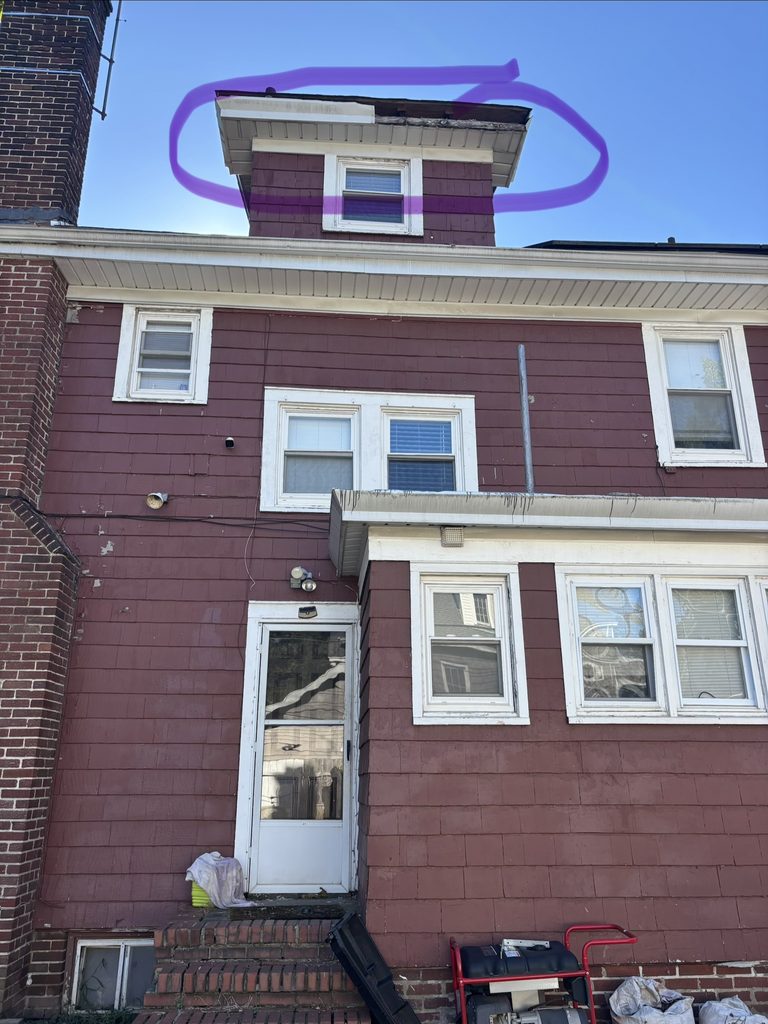
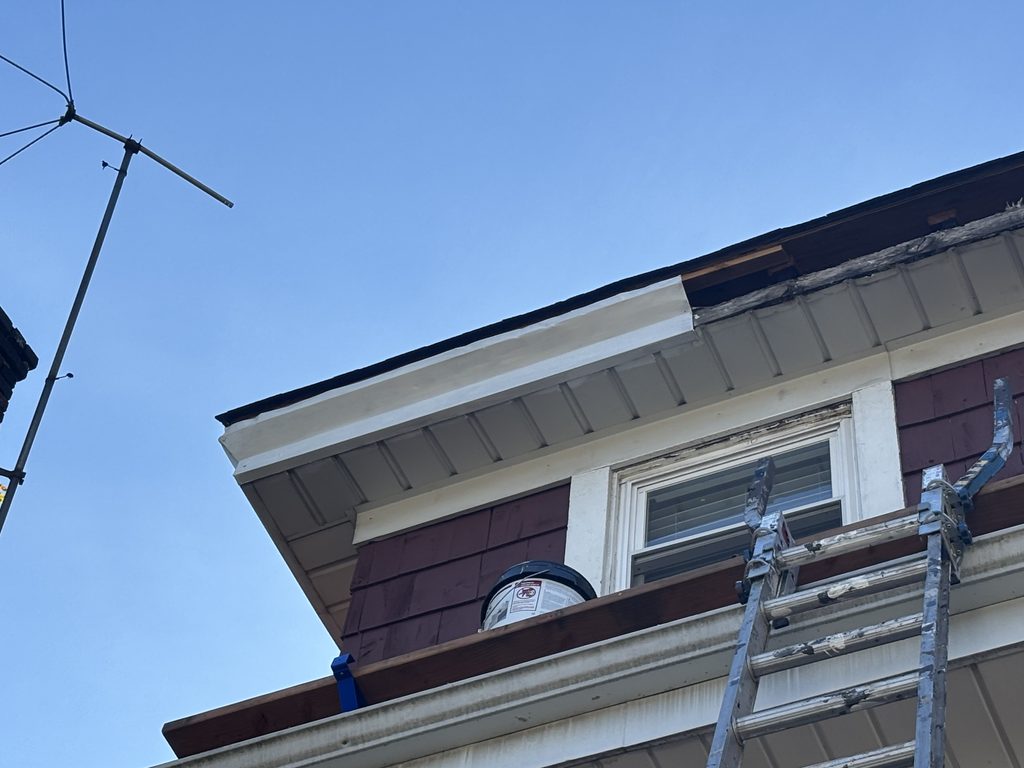
From the street, the house looked mostly sound. Up close, the problems added up. The shed dormer’s fascia wrap had come loose, leaving its wood sub-fascia board bare
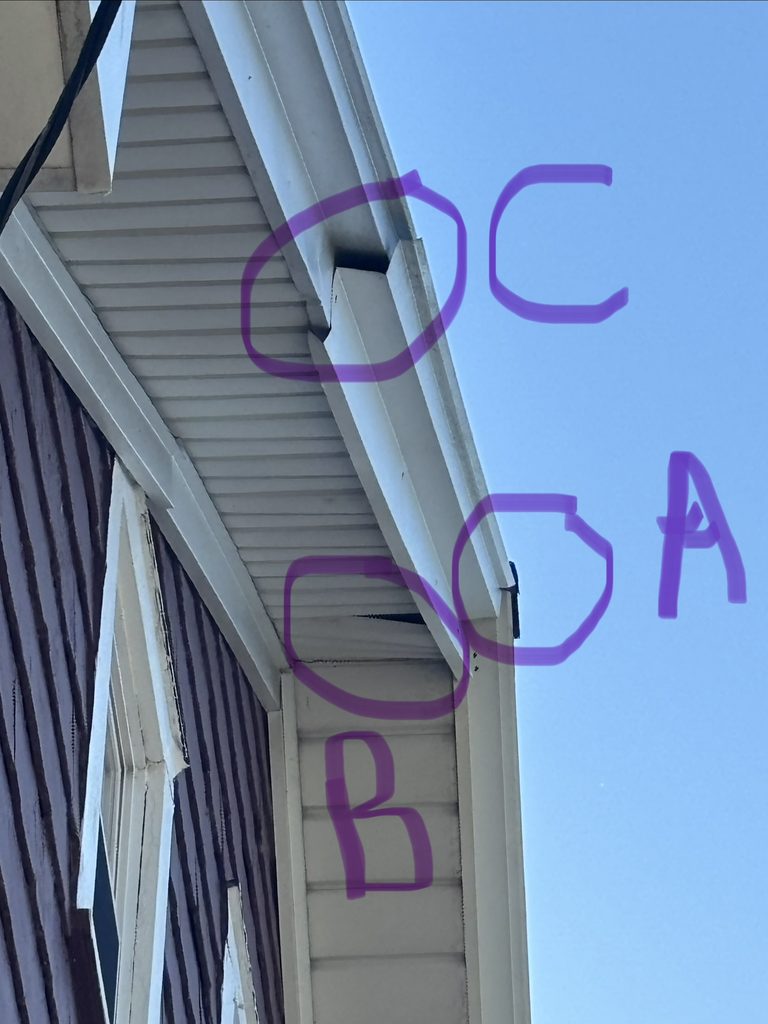
On the main gable, we found three trouble spots: an open gap at the peak, sagging soffit panels, and a rake fascia splice that had pulled apart
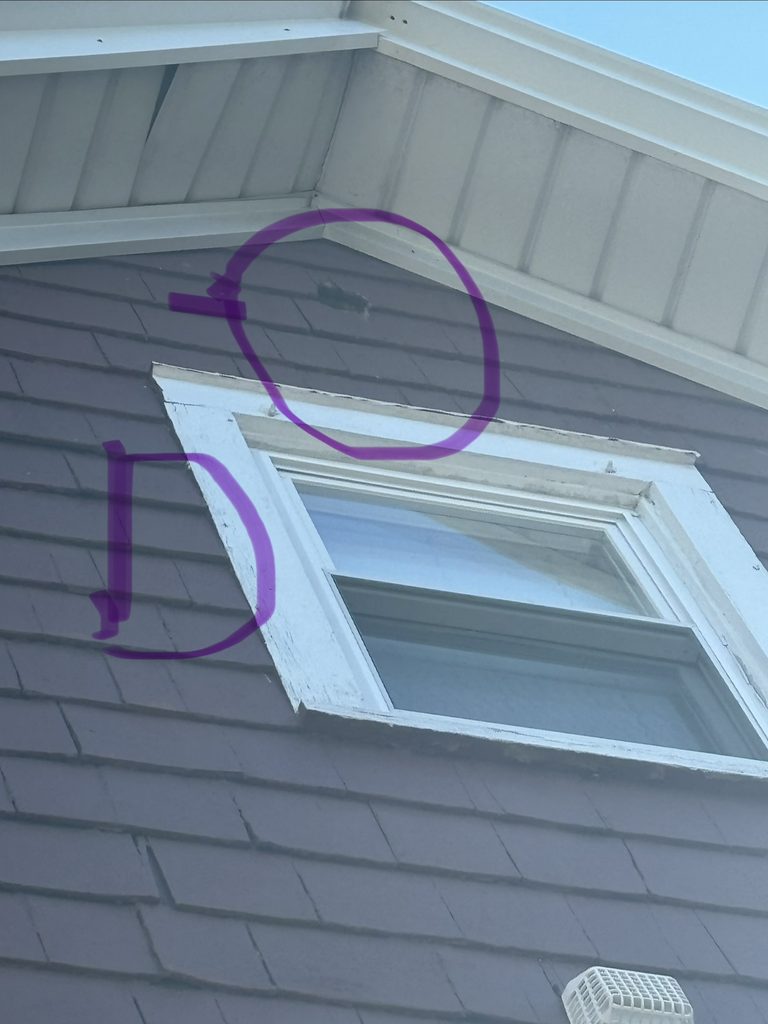
Just below the soffit, a hole had opened in the wood shingle siding.
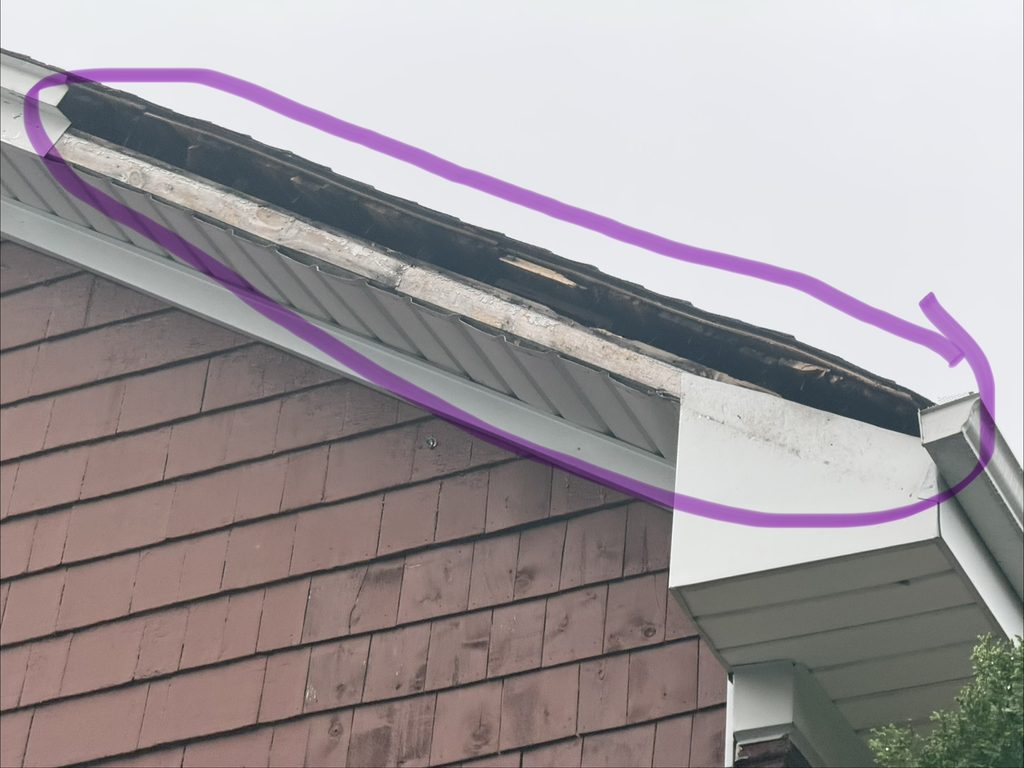
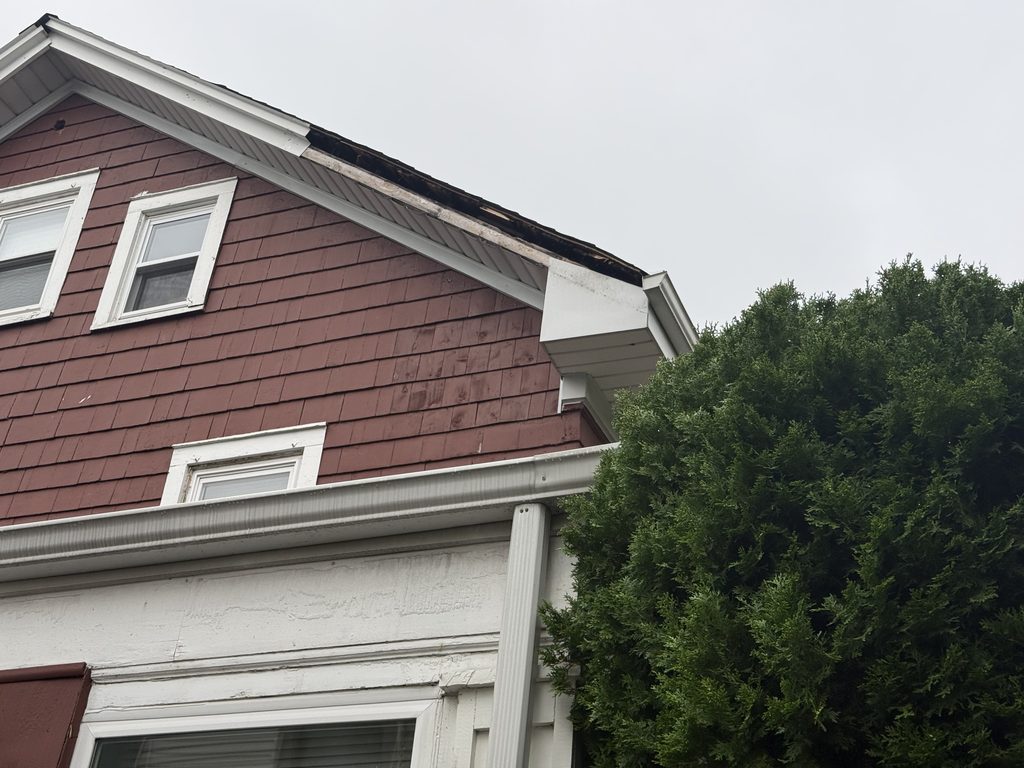
Around the corner, a full length of rake trim was missing, and the rake board behind it was weathered and exposed.
Our Approach
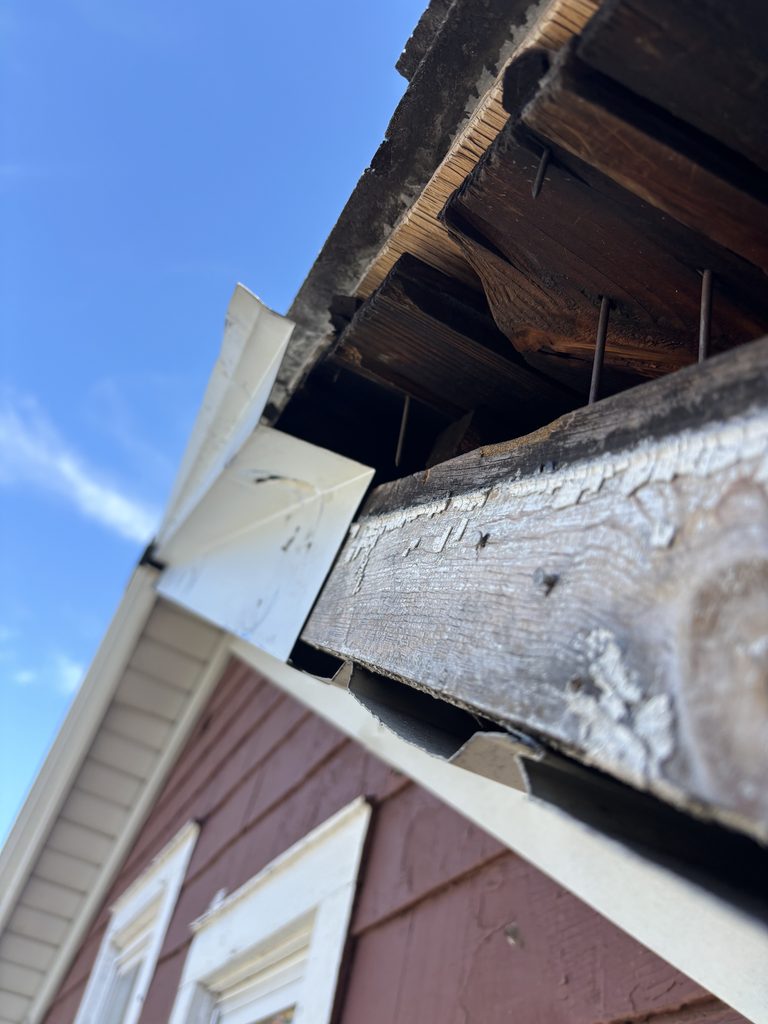
We always prep wood before we cover it. Trim that goes over rotting or flaking wood only hides the problem, so on both the dormer and the gable we scraped the exposed boards down to sound wood and primed them.
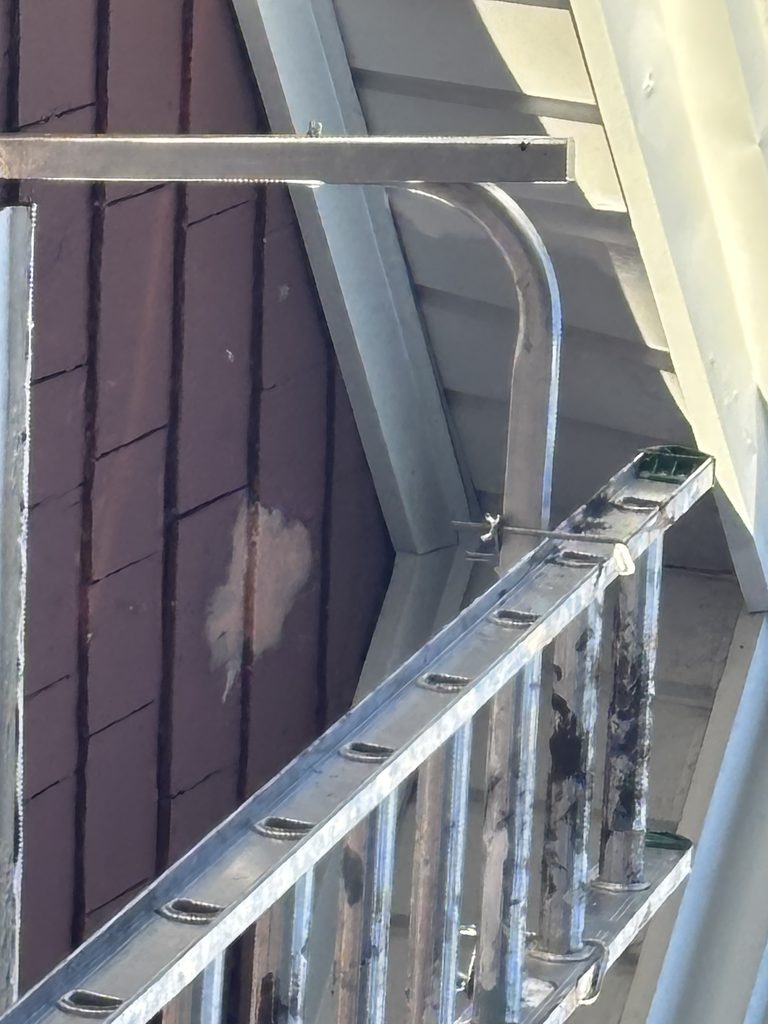
On the dormer, the original aluminum fascia wrap was still usable, so we reinstalled it rather than replacing it. We tucked it tightly under the drip edge and locked it over the soffit panels so water runs off the roof and past the board, not behind it.
On the gable, there was no trim left to reuse, so we custom-fabricated matching white aluminum rake trim and tied it cleanly into the lower gable return. We overlapped the separated rake splice so the upper piece laps over the lower one, the way shingles do, and re-seated the sagging soffit panels in their channels.
At the ridge, we cleared out bird nests and installed a custom aluminum peak cap to close the gap where the two rake trims meet. Open peaks are one of the most common ways birds, squirrels, and insects get into attics.
For the siding hole, we did not cut out and replace a whole section of original shingles. We built the hole back up with layered, custom-shaped wood shims set in high-strength structural epoxy, then sanded the repair flush with the surrounding shingles.
The Result
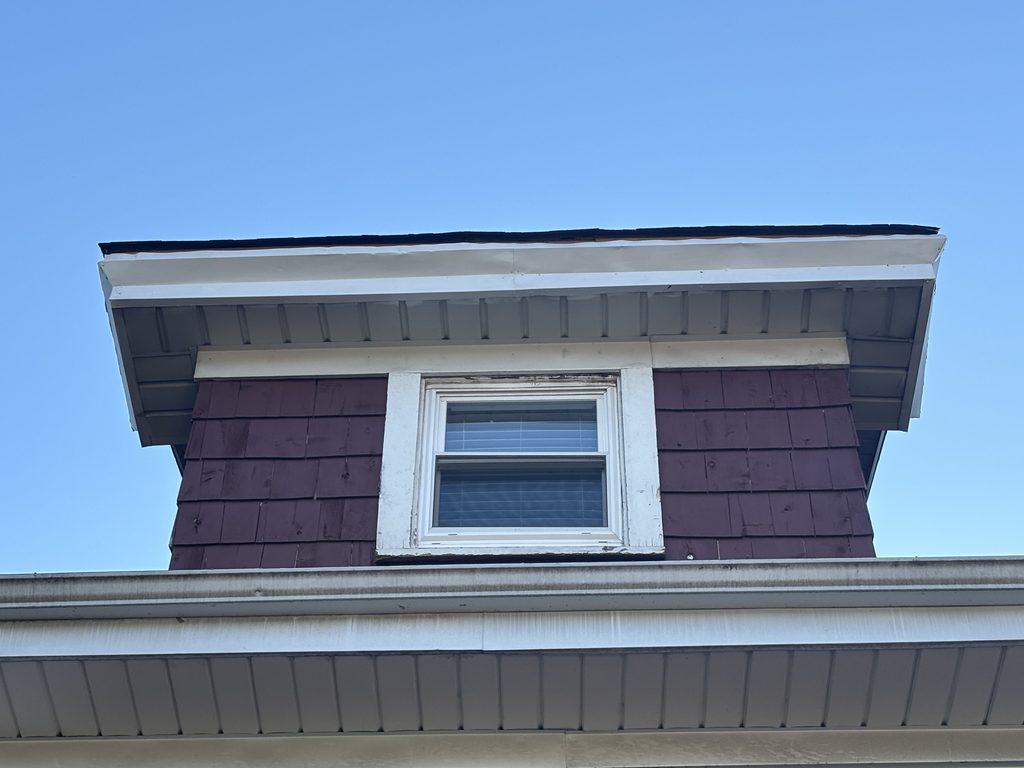
The dormer eave is wrapped and sealed again. This after photo shows the shed dormer with its white aluminum fascia wrap reinstalled along the full eave. The wrap is tucked under the drip edge and locked over the soffit, so the primed board behind it stays dry.
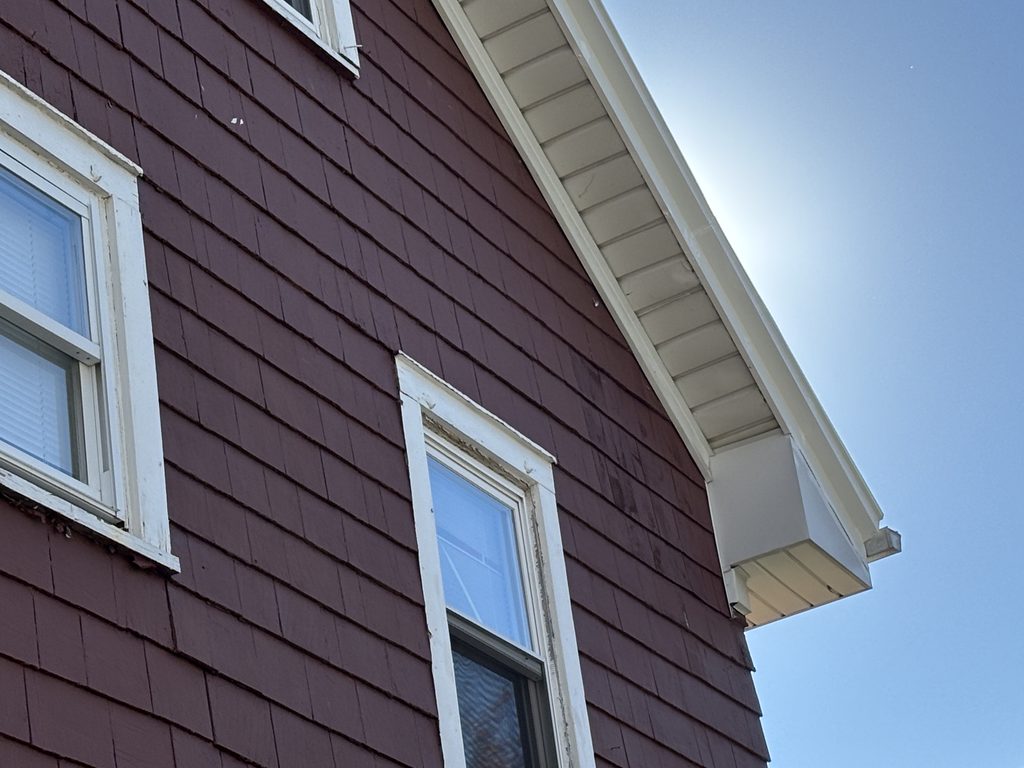
The new rake trim covers the primed board from peak to return. This after photo shows the gable with its new custom-fabricated rake trim in place, running cleanly down into the gable return. The scraped and primed rake board is now fully covered and protected.
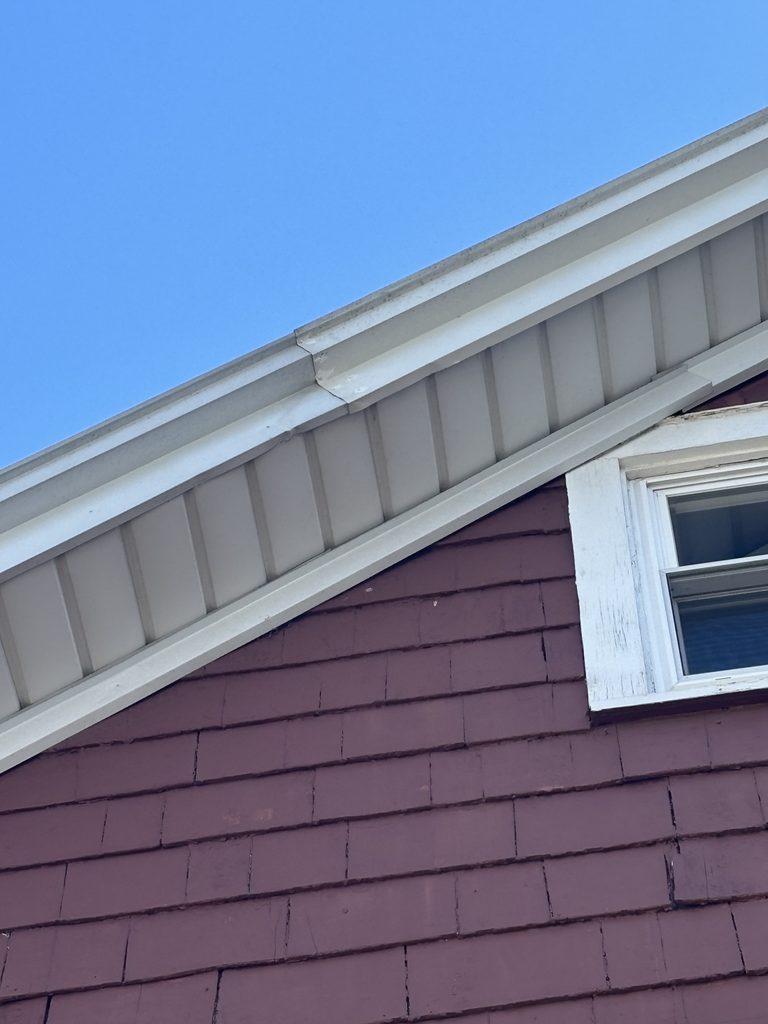
This after photo shows the rake seam overlapped and the soffit panels seated straight in their channels. The overlap now sheds water down the slope instead of letting it into the joint.
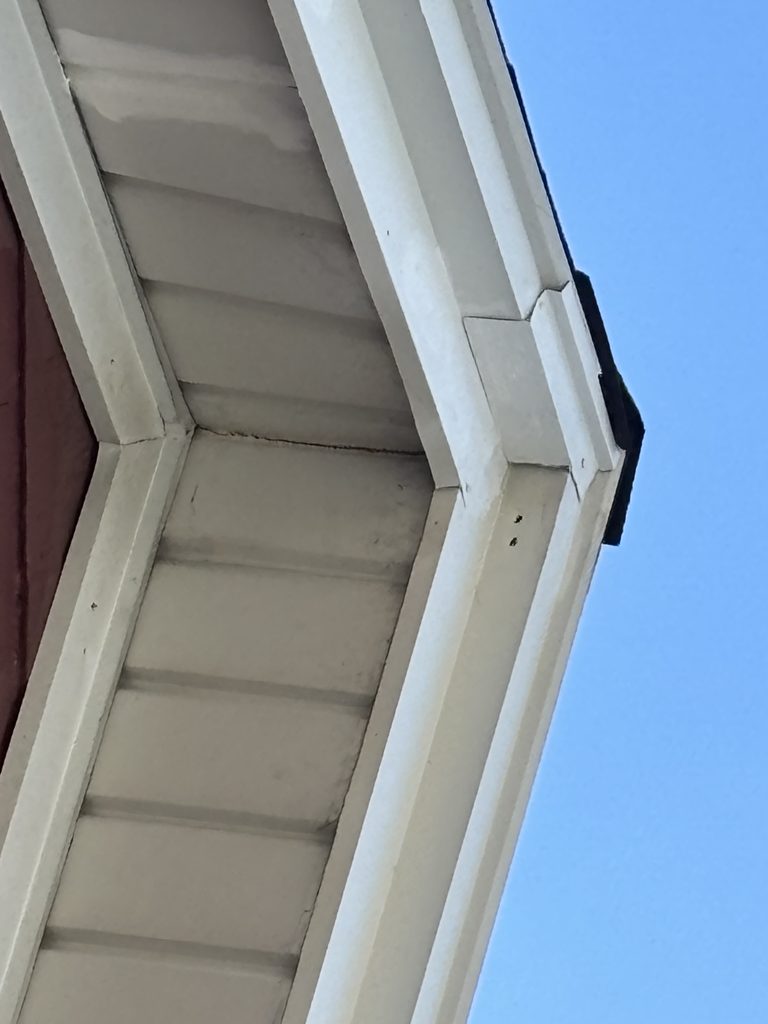
This after photo shows the gable peak with the custom aluminum cap installed where the two rake trims meet. With the nests cleared and the gap sealed, birds can no longer get into the roofline.
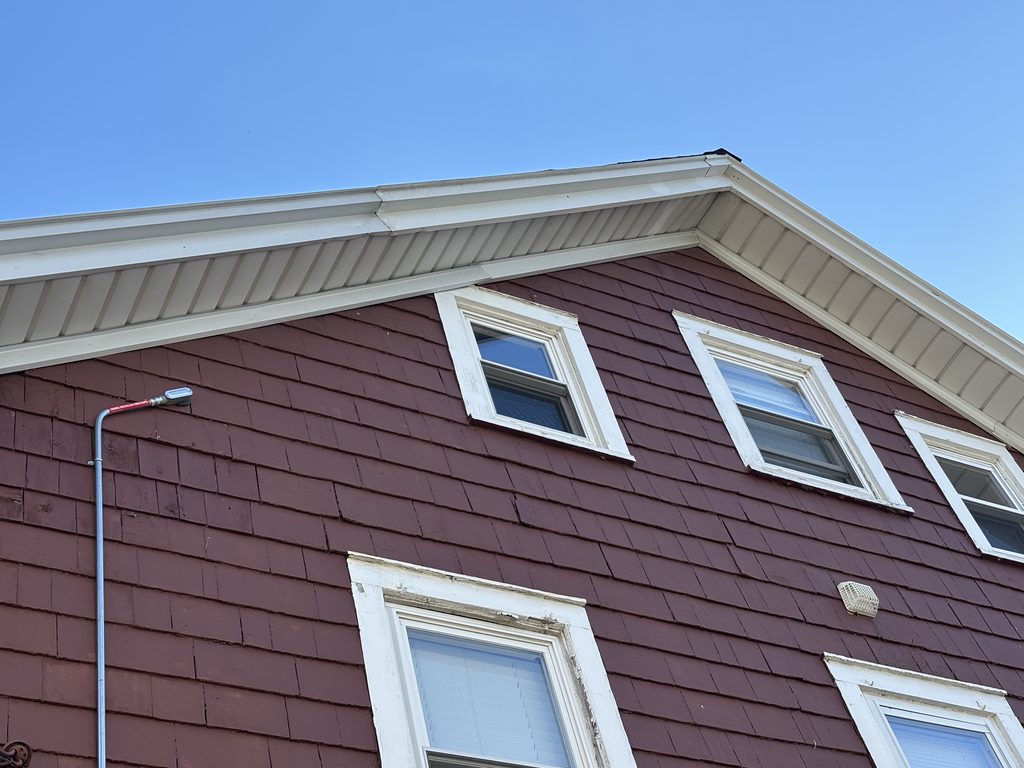
This after photo shows the gable wall with the siding hole repaired and the rake trim complete. The patch was color-matched so closely that it is hard to pick out from the original shingles.
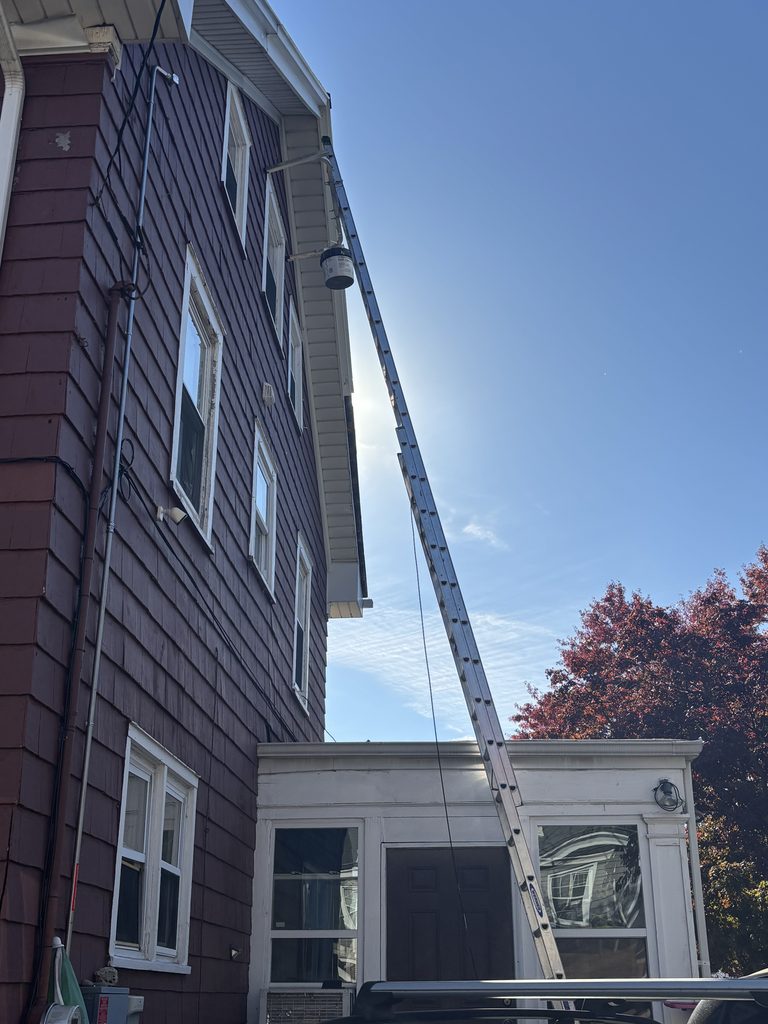
All of this work sits at the very top of a tall house, and it is exactly the area that tends to get overlooked until there is a leak inside. This after photo looks straight up the side of the home, with the ladder still in place against the finished roofline. It shows the height at which all of this trim and siding work was done.
Why Restoration Beats Replacement
It would have been possible to tear off and replace larger sections of trim and siding here. But original wood shingles and framing on a home of this era are worth keeping, and most of what failed was a matter of loose seams, missing pieces, and open gaps. A few habits help any older home:
- Look up at your roofline each season with binoculars. Bent trim, open seams, and droopy soffit panels are early warnings.
- Watch for birds going in and out near the peak. That usually means there is an opening.
- Make sure any wood behind trim gets scraped and primed, not just covered.
- Fix small siding holes promptly, before water gets into the wall.
Call or text us at (201) 248-2861 to discuss what we can do for your beautiful old home.