
2 story brick apartment building in Newark NJ
Front doors take more abuse than almost any other part of an older building. They are opened hundreds of times a week, struck by deliveries and strollers, and exposed to sun, rain, and winter cold. On this two-story brick apartment building in Newark, the outer double doors had been doing that work for about a hundred years. Here is how we brought them back, and what this job can teach any owner of an older home or building.
The Challenge
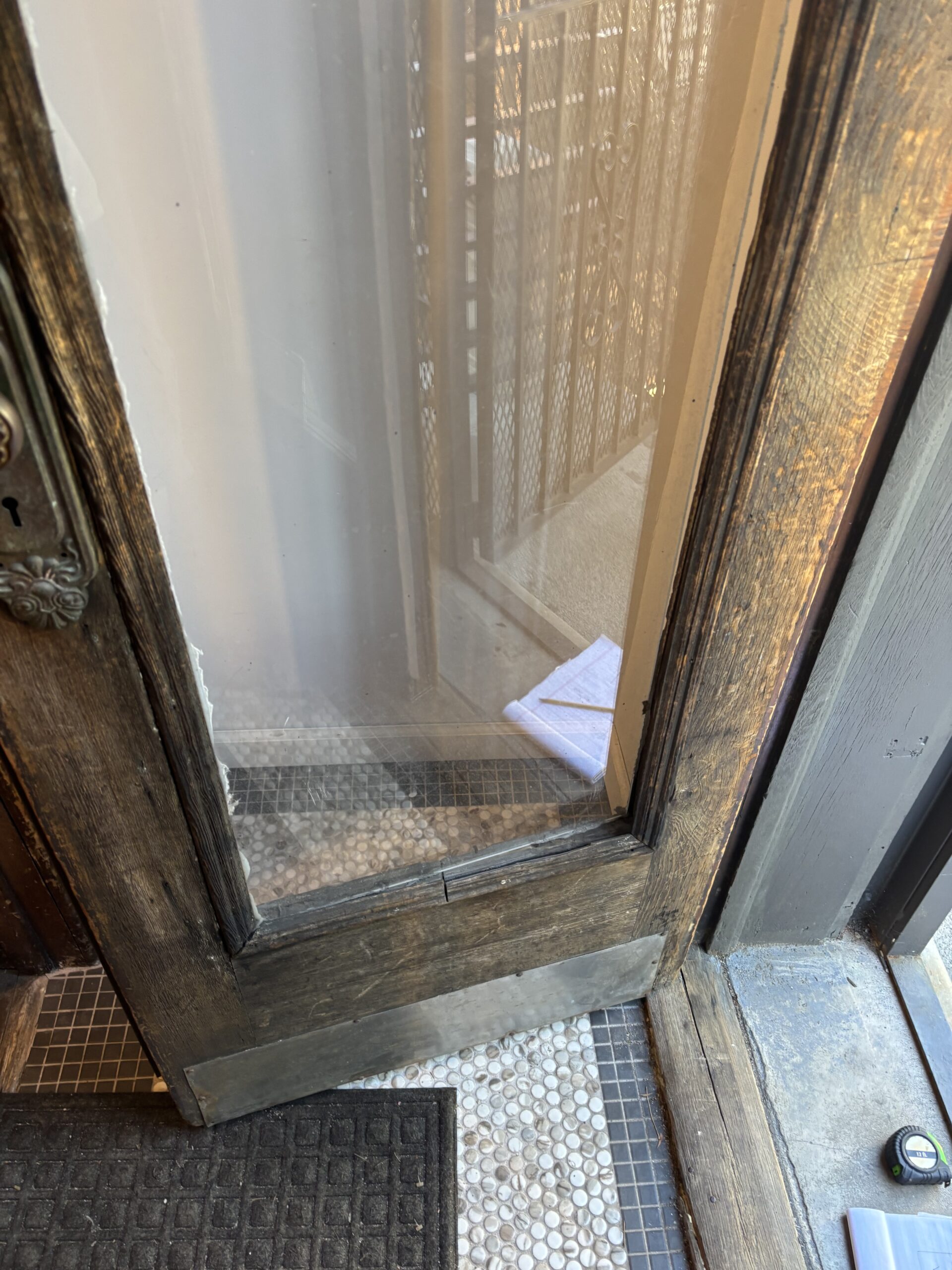
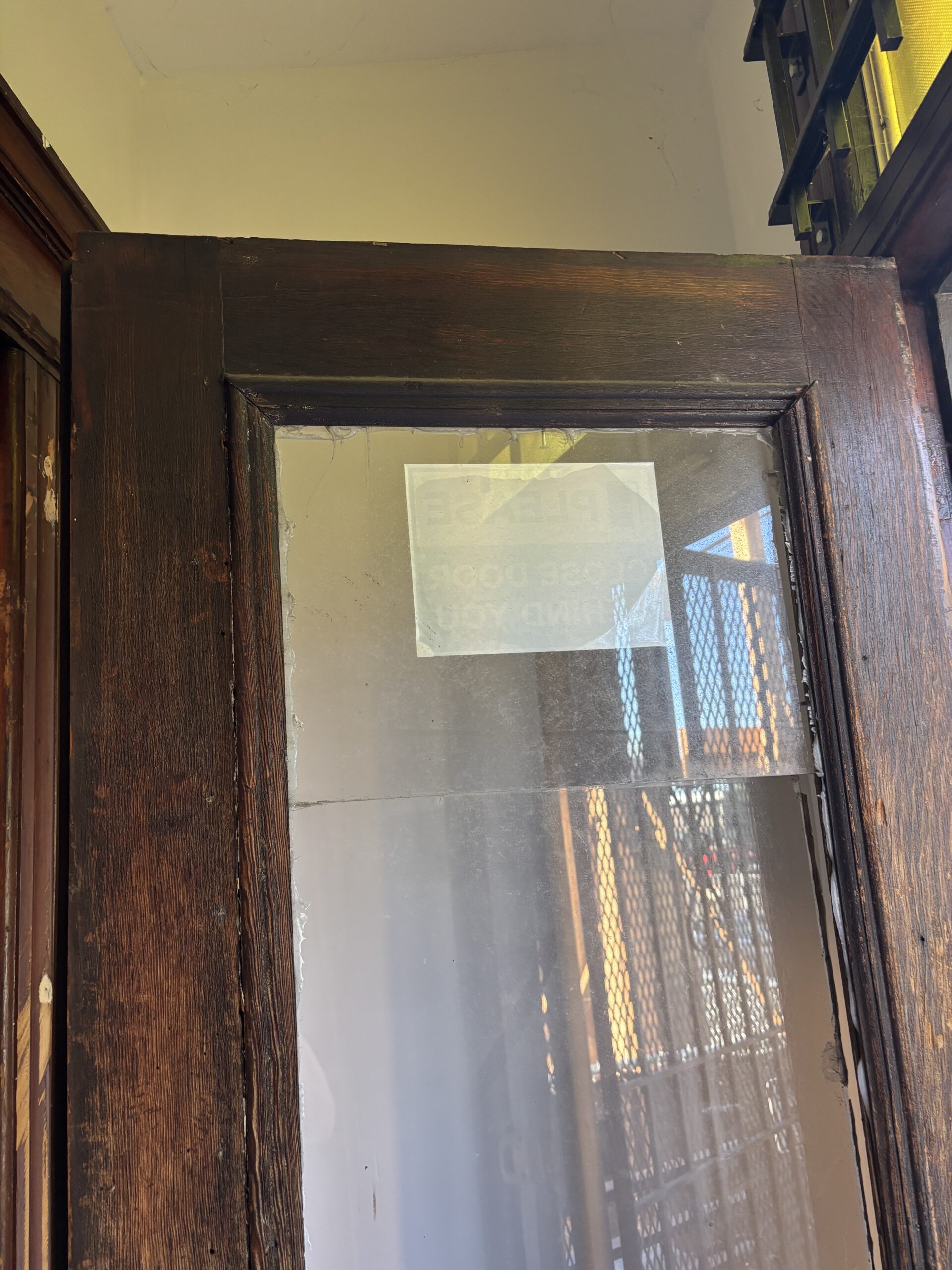
When we first looked at these doors, almost all of the original stain was gone. The wood had turned dry and gray, and there was wood loss along the edges and lower rails. Long ago, the original glass had been replaced with plexiglass, which had clouded and scratched over the years and never suited doors of this age.
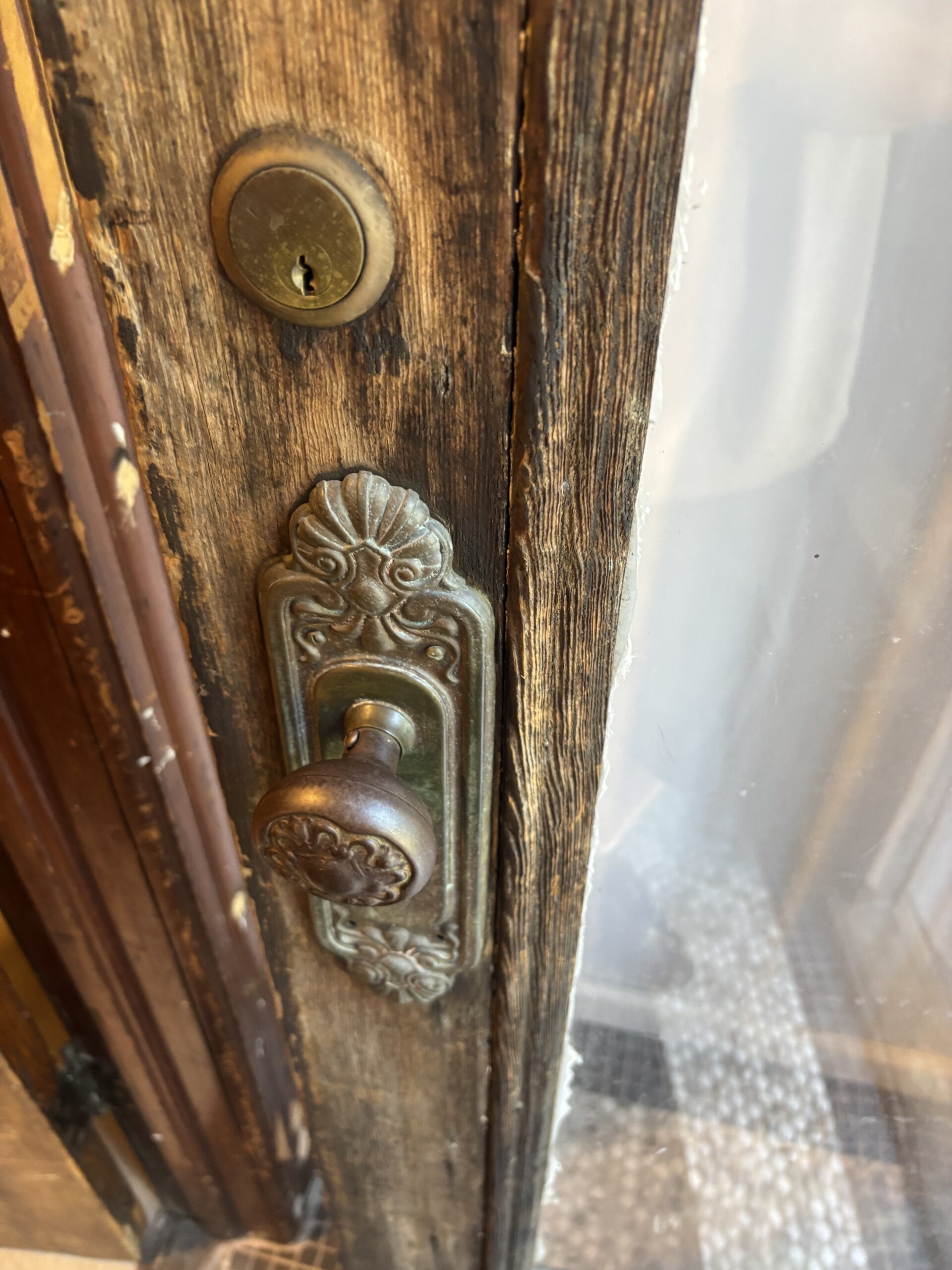
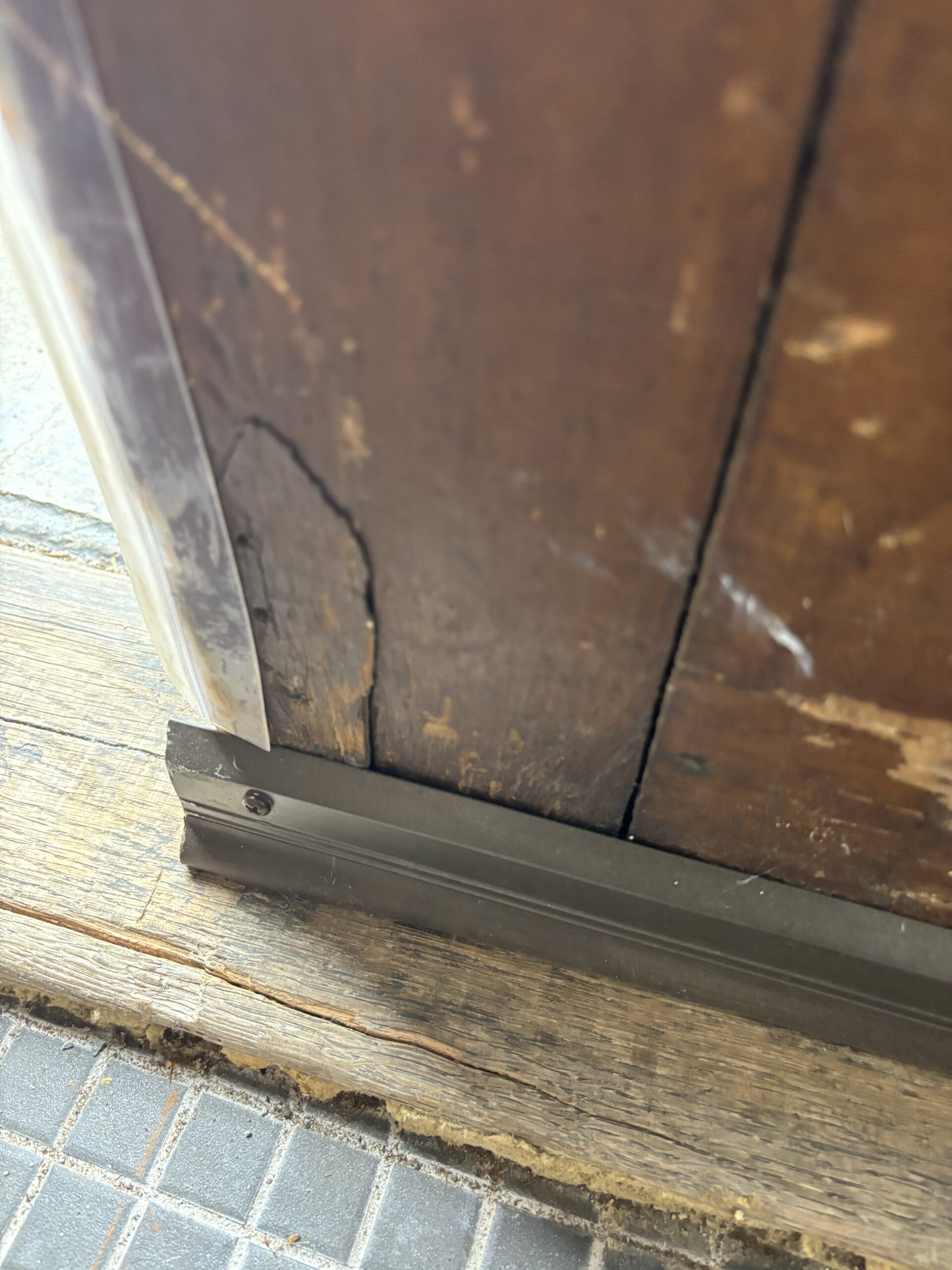
Up close, the damage was clear. Splits ran along the bottom of the doors, and cheap weatherproofing had been fastened over damaged wood instead of repairing it. Still, the bones were good. The ornate knob and escutcheon plate and the old mail slot were all still there, and the solid frames were worth saving.
Our Approach
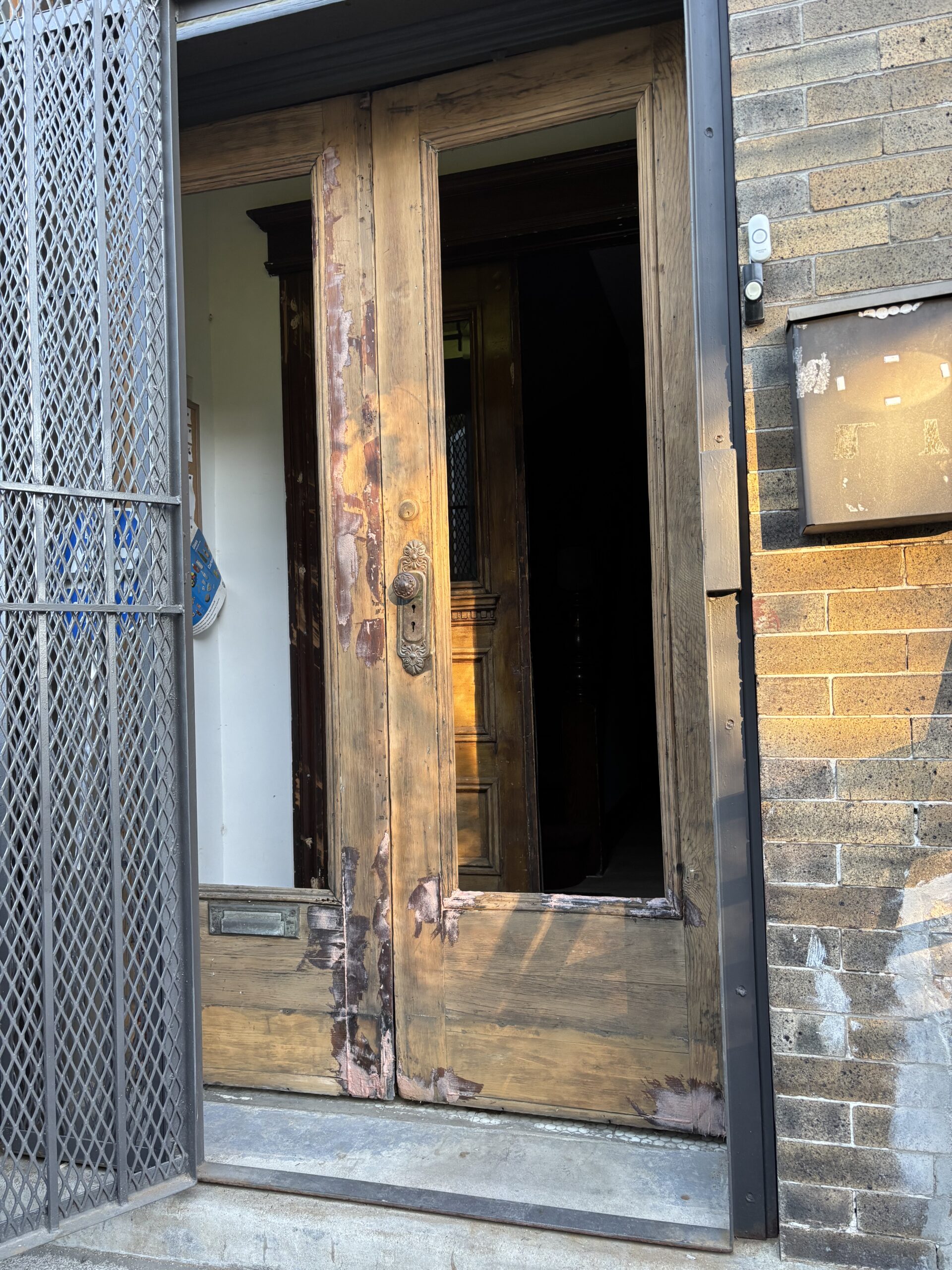
We sanded both doors down to clean wood. Sanding is more than surface prep on a job like this. It shows you exactly where the damage is, from small dings to deeper gouges and areas where wood has worn away.
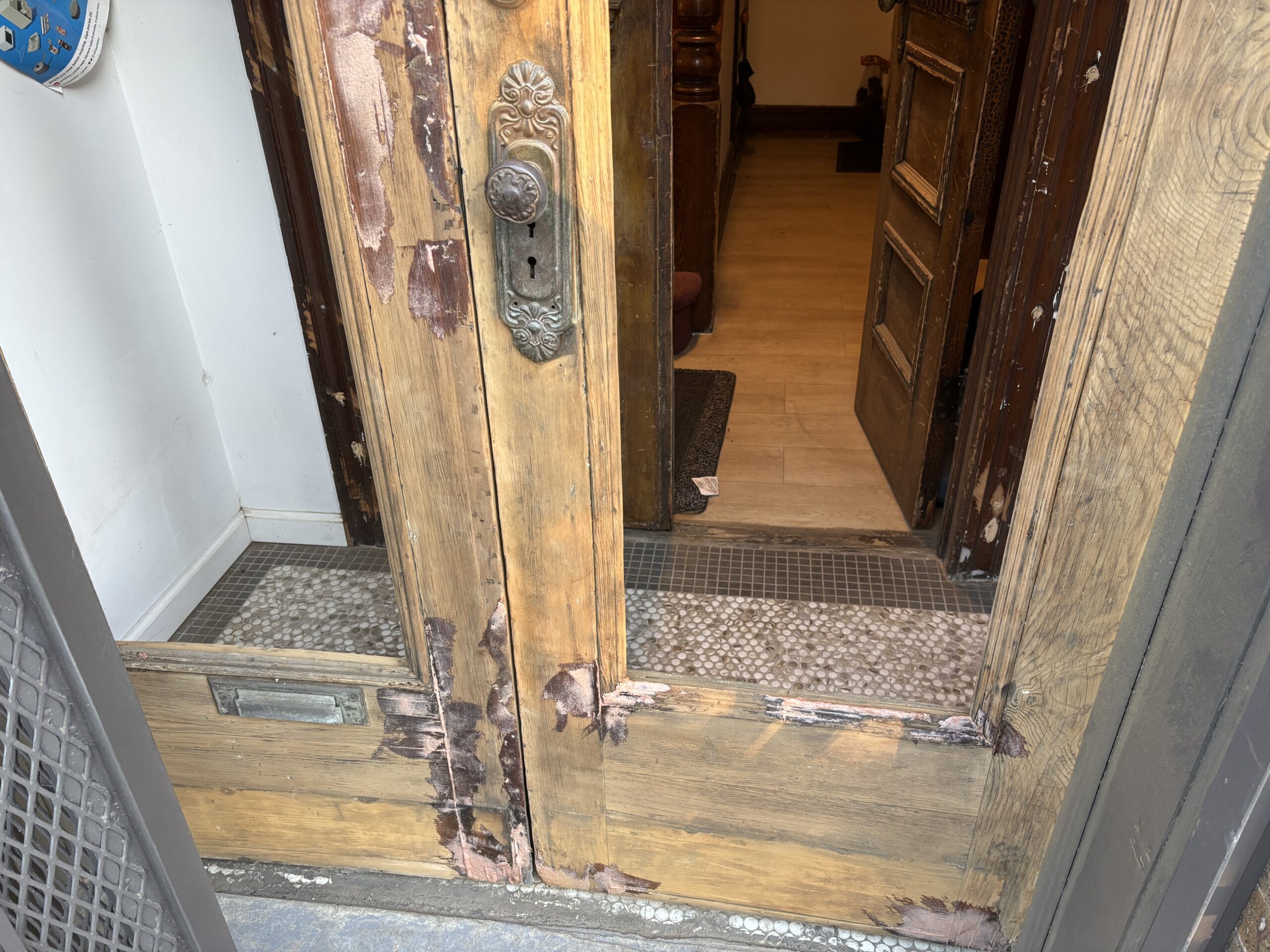
Next, we used epoxy and wood filler to repair the hundreds of dings and damaged spots inflicted over the decades. Epoxy is well suited to rebuilding lost wood on exterior doors because it bonds firmly and stays stable. Once cured, each repair was shaped back to the original profiles so the doors kept their period lines.
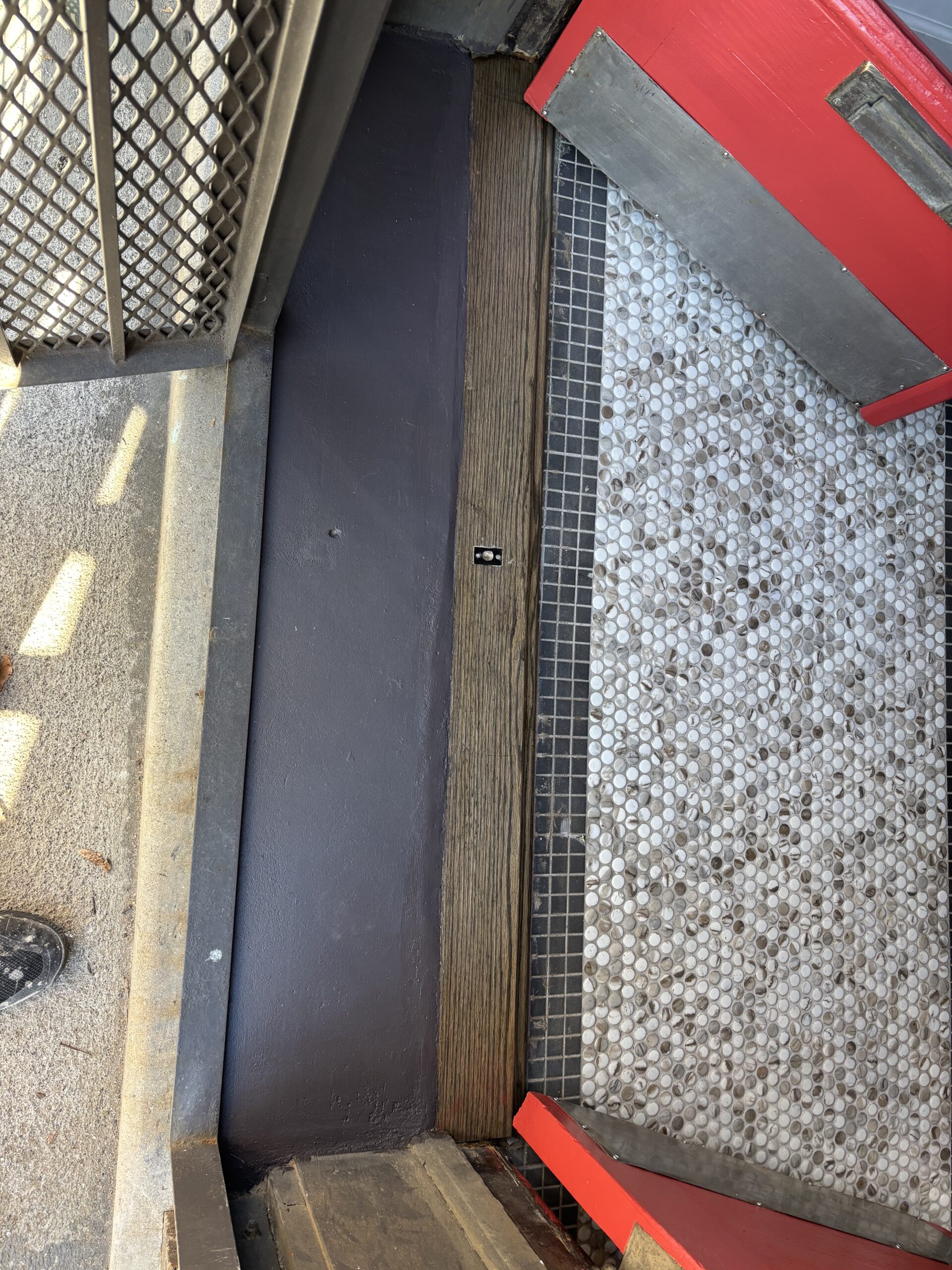
At the threshold, we installed a brand new saddle. The saddle is easy to overlook, but it takes constant foot traffic and gives the doors a solid, even surface to close against.
The Result
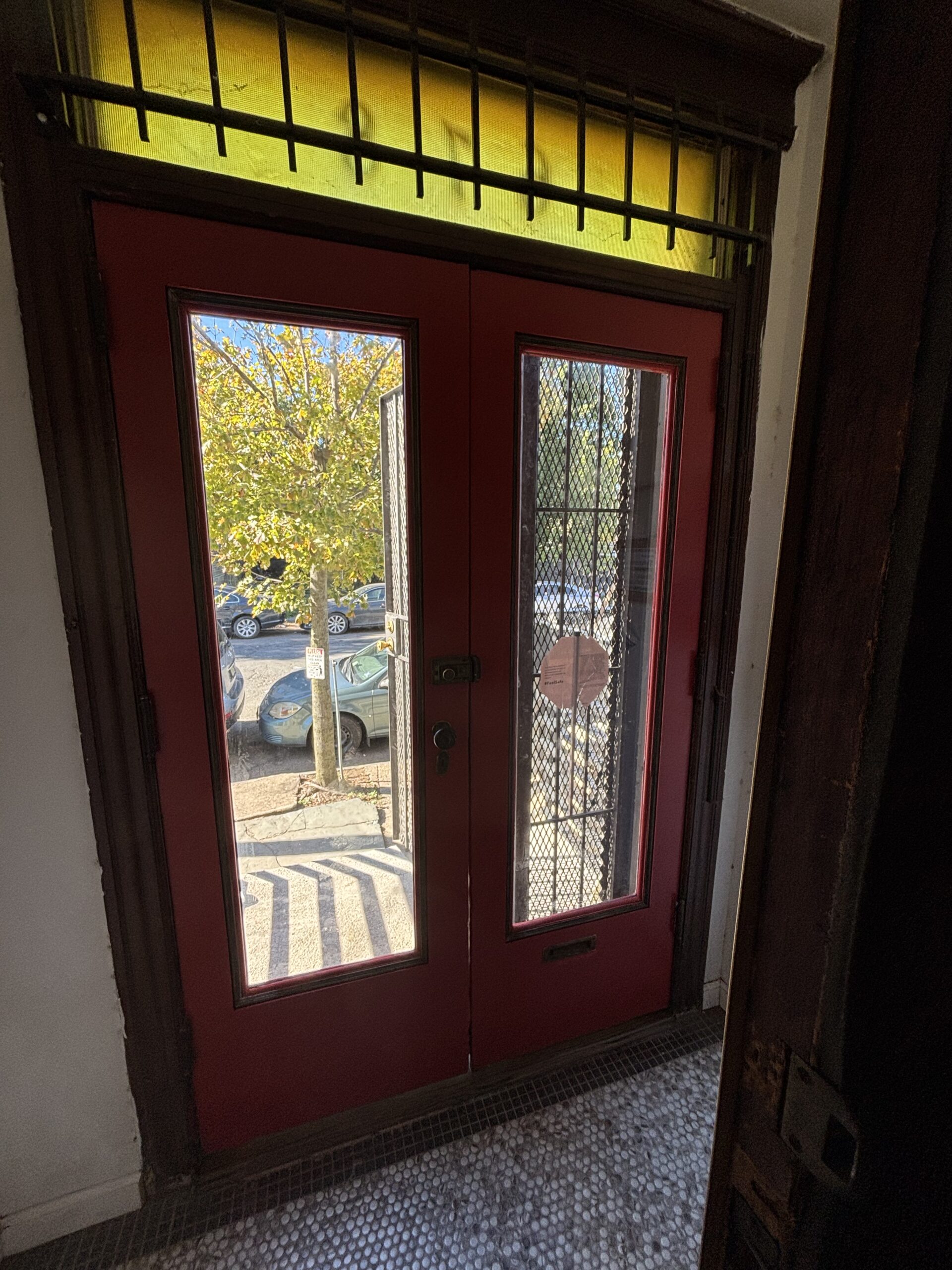
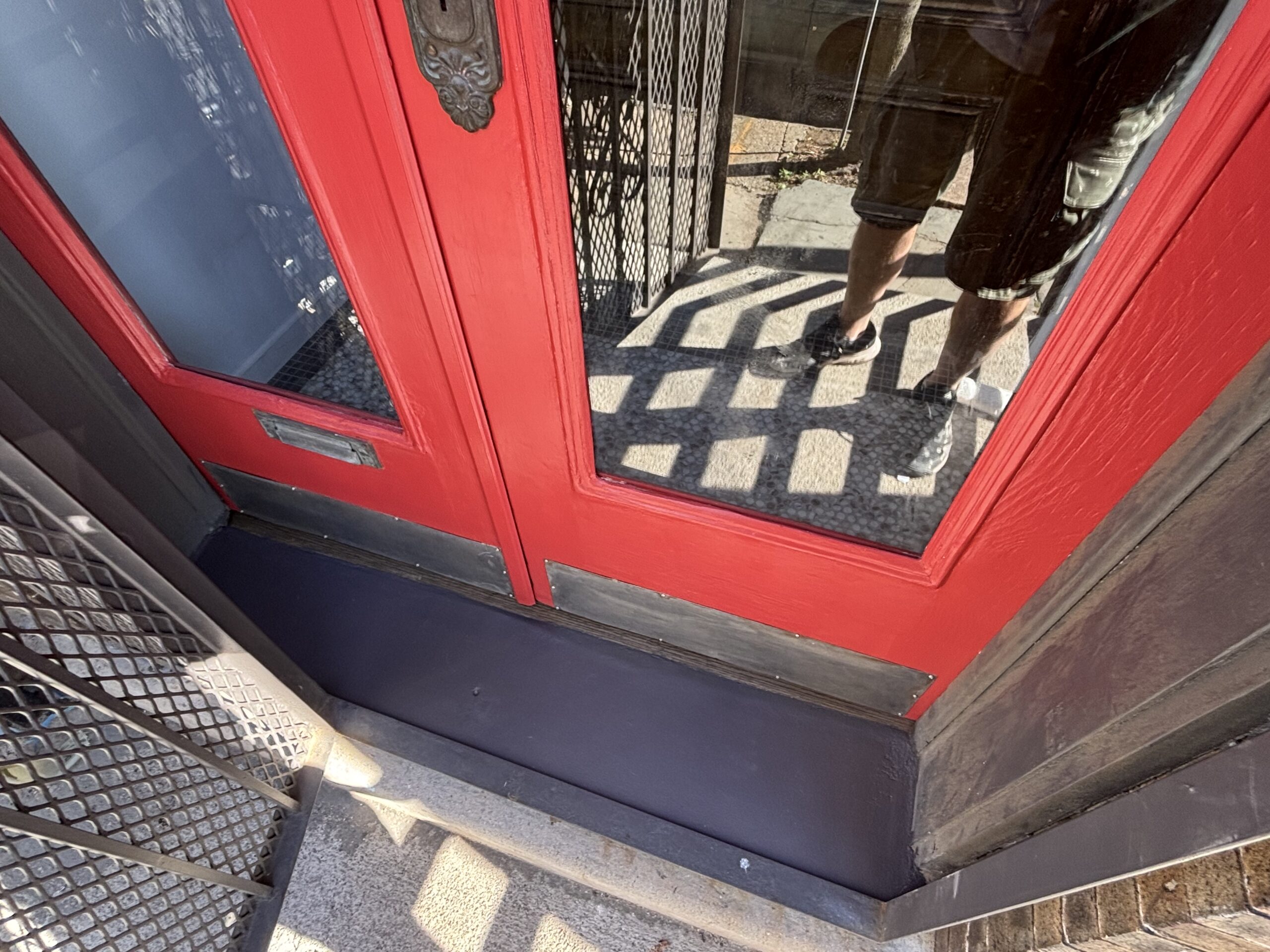
We replaced the plexiglass with new tempered glass, which is clear, strong, and safer for a busy entry. Then we applied several coats of a vibrant red. The original hardware and mail slot stayed in place, so the doors kept the character that made them worth restoring.
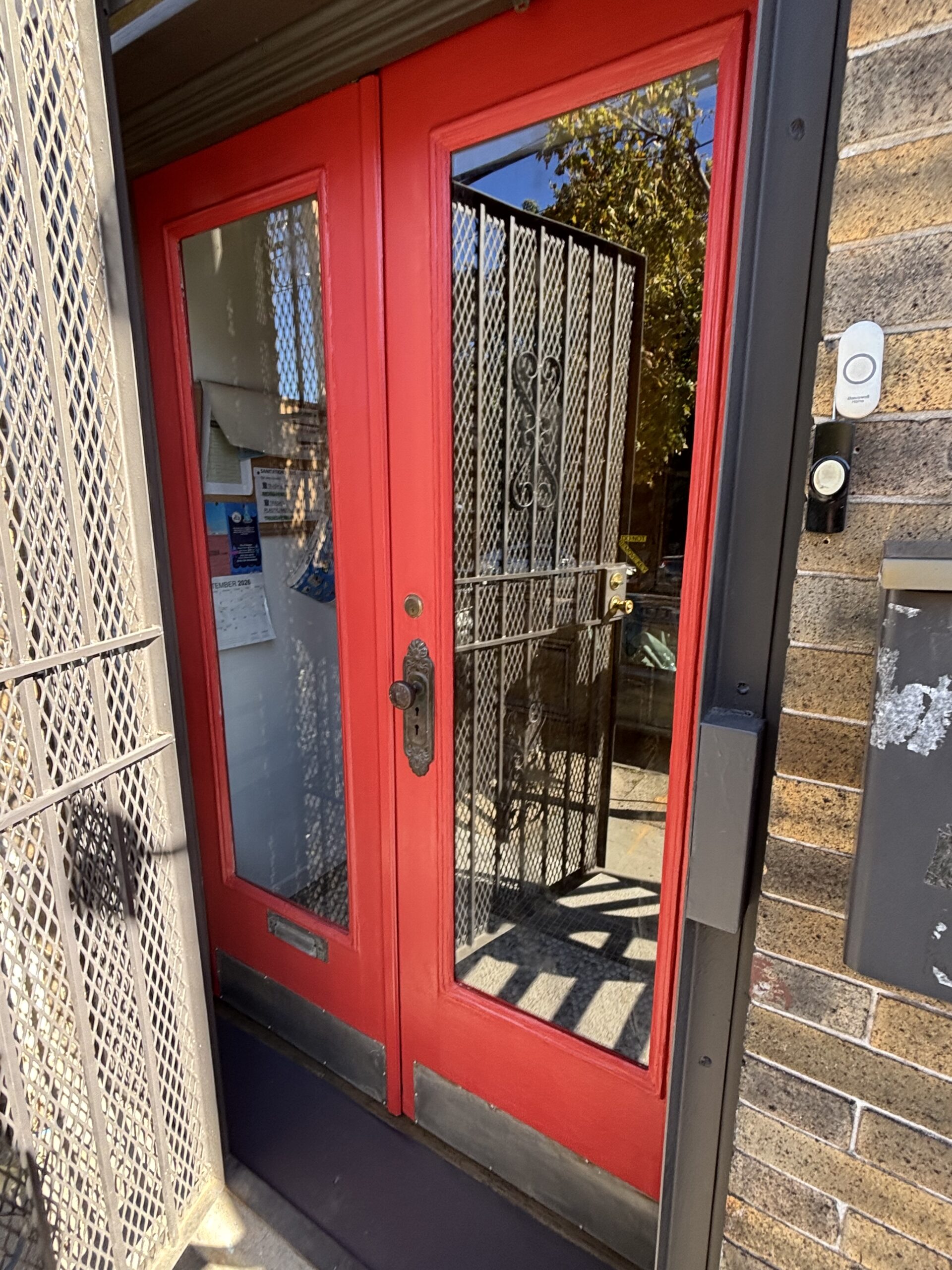
The old, tired doors are now the centerpiece of the building.
Why Restoration Beats Replacement
A new off-the-shelf door rarely matches the solid wood, proportions, and hardware of a hundred-year-old original. Doors like these were built to last, and in most cases what they need is repair, not removal. A few lessons from this job apply to almost any older home:
- Keep the finish up. Once stain or paint wears through, bare wood takes on water and starts to break down. Recoating before it gets that far is the cheapest repair there is.
- Don’t cover damage, fix it. Weatherproofing screwed over split or rotting wood can hide problems while they get worse. Repair the wood first, then seal it.
- Choose glass that suits the door. Plexiglass scratches, clouds, and looks out of place on period doors. Tempered glass stays clear and handles daily use.
- Watch the threshold. A worn saddle lets doors drag and lets water sit where it can do harm.
- Save the hardware. Original knobs, plates, and mail slots are hard to replace, and they carry much of a door’s character.
If your older home or building has an entry door with similar issues, contact us to talk about restoring it.
Call or text us at (201) 248-2861 to discuss what we can do for your beautiful old home.