
Located in the historic Forest Hill section of Newark, New Jersey, this project involved the meticulous preservation of a unique one-room outbuilding (“the Dollhouse”). Despite its smaller scale, the structure features high-classical architectural details that had suffered significant deterioration from decades of exposure. The primary challenge was the severe wood rot along the base of the solid plank door, where moisture “wicking” had compromised the structural integrity of the timber. Rather than replacing these historic materials, our master craftsman utilized advanced epoxy consolidation and wood-fill techniques to stabilize the core and rebuild the lost profiles, ensuring the door remains weather-tight for decades to come.
The restoration extended beyond the woodwork to the classical masonry elements that define the building’s character. The stone archway and its flanking Corinthian columns were carefully stripped of failing paint and repaired to reveal their original crisp lines. To highlight the exquisite detail of the period architecture, a sophisticated color palette was applied, featuring hand-painted gold accents on the ornate capitals and the central keystone of the arch. This careful application of color brings a refined elegance to the small structure, making it a standout feature of the property.
By combining traditional craftsmanship with modern preservation science, this project demonstrates that even the smallest historic buildings deserve expert care. The transition from raw, rotted wood to a polished, regal finish serves as a testament to the skill required to save original architectural features. This Forest Hill outbuilding now stands fully restored, honoring the historic character of the neighborhood while showcasing the enduring beauty of expertly maintained old-world wood and stone.
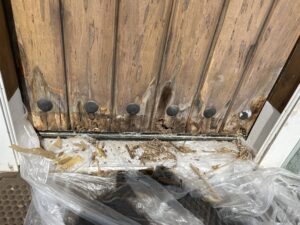
This view highlights the extensive loss of original wood at the bottom of the door, requiring a master’s touch to reconstruct the profile.
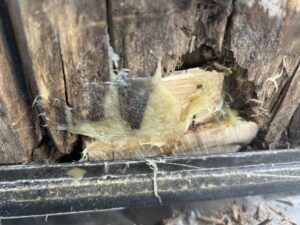
Expertly fitted wood “Dutchman” patches are integrated with structural epoxy to replace the most severely damaged sections of the door’s base.
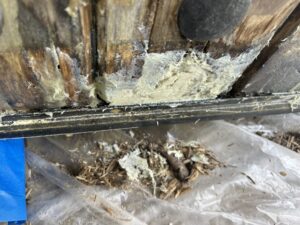
A technical close-up of the epoxy consolidation process, where high-strength resins are used to stabilize and rebuild the rotted wood fibers.
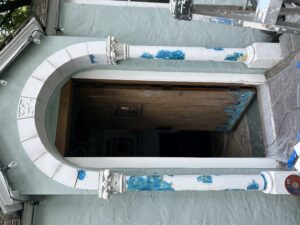
The initial preparation phase shows the stone arch and columns being stripped of old, failing paint to reveal the classical masonry beneath.
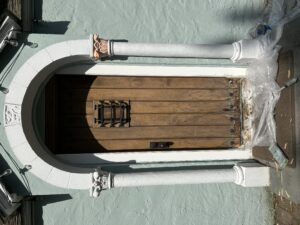
The lower section of the door during the stabilization phase, showing the transition from raw, damaged timber to a solid, paint-ready surface.
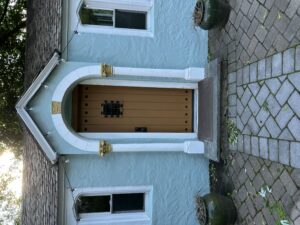
The completed restoration features a rich, warm wood finish on the door, perfectly framed by the white masonry and gold-tipped Corinthian capitals.
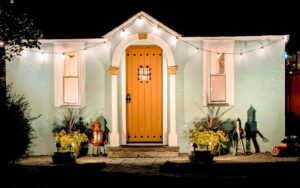
The proud homeowner sent us this amazing photo of the finished work, showcasing the stunning results of the historic outbuilding restoration in Forest Hill. The project beautifully preserves the structure’s original character while introducing elegant modern touches, such as the warm wooden door and the arched entryway illuminated by soft string lighting. Flanked by charming garden accents and vibrant yellow flowers, the restored building now serves as a picturesque focal point on the property. We are thrilled to share this final look at the craftsmanship and care that went into bringing this unique space back to life.