
This project took place in a large kitchen of a 1910 Dutch Colonial home in Forest Hill, Newark, NJ, and extended into the butler’s pantry and multiple adjoining closets. The space was covered with worn Home Depot vinyl tiles — a surface that simply didn’t belong in a home defined by its character, craftsmanship, and 11 other rooms of original hardwood flooring. Our goal from the start was to remove this out-of-place material and restore a floor that felt authentic to the home’s history and architectural integrity. As we carefully opened the floor, we uncovered multiple generations of materials — two subfloors and three layers of vinyl and linoleum — each representing a different era of renovation.
One of the key challenges was working within the realities of a 100+ year old structure. Among the layers, we encountered original 8″ x 8″ asbestos linoleum tiles, which we safely left in place and sealed, following best practices to preserve both safety and structural integrity. The space presented countless tight corners, transitions, and irregularities, requiring careful planning and precision — especially as we extended the installation seamlessly into closets and beneath appliances like the stove and refrigerator.
The finished result is a beautifully installed hardwood floor that feels true to the home’s original character. We selected and installed a high-quality wood floor designed to closely match the existing hardwood throughout the rest of the house, creating a cohesive and timeless look. With meticulous attention to detail at every step, this floor not only restores the home’s historic charm but is built to serve its occupants reliably for the next 100 years.
Call or text us at (201) 248-2861 to discuss what we can do for your beautiful old home.
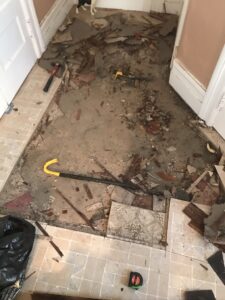
Debris from multiple flooring generations is cleared as the structure underneath becomes visible. This stage emphasizes the amount of preparation needed before any new flooring could begin.
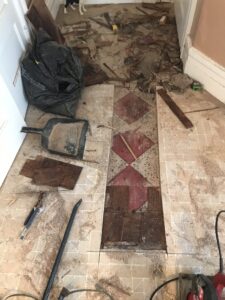
This image captures the early demolition phase, revealing multiple layers of old flooring materials accumulated over decades. It highlights the complexity of working in a historic home with hidden subfloors and legacy installations.
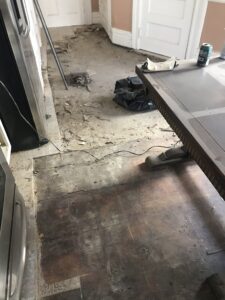
Debris from multiple flooring generations is cleared as the structure underneath becomes visible. This stage emphasizes the amount of preparation needed before any new flooring could begin.
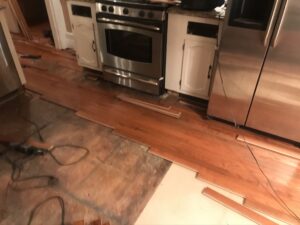
The flooring progresses into the main kitchen area, integrating cleanly with surrounding architectural features. Precision cutting is required to navigate tight edges and transitions.
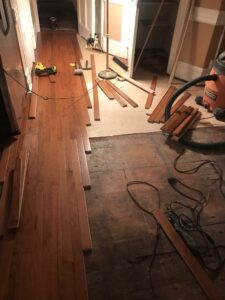
New hardwood installation begins, with boards carefully aligned to create a seamless layout. Attention to spacing and direction ensures consistency with the rest of the home.

The small pantry receives the same level of detail and finish as the main kitchen. The flooring integrates seamlessly despite the smaller, more confined layout.
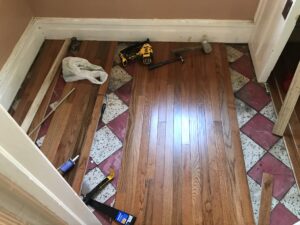
In the expansive Butler’s pantry, the newly in stalled hardwood reveals tight seams and clean alignment. The craftsmanship ensures durability as well as a refined appearance.
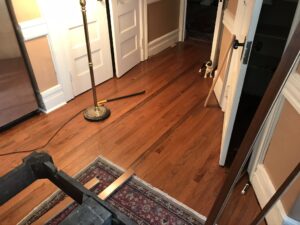
The floor extends into adjoining areas, showing consistent color and pattern matching. This helps unify the kitchen with the rest of the home’s original flooring.
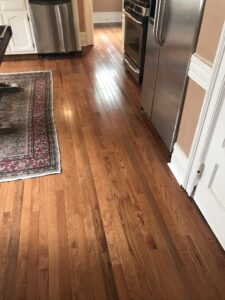
The near-complete kitchen floor showcases a rich, warm finish that complements the home’s character. The new hardwood closely matches the original flooring throughout the house.
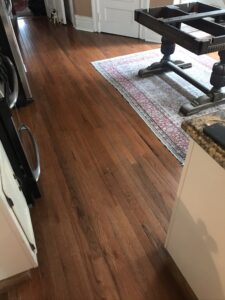
Final view of the completed project, highlighting a smooth, cohesive installation across the entire space. The result is a timeless floor built to last for generations.